
Last Updated: November 16, 2026
Quick Summary
Premium streetwear hoodies cost more because every stage of making them costs more: heavier fabric, denser stitching, smaller production runs, and design work that fast fashion skips. Small-batch production spreads setup and design costs across fewer units, and brands that never restock price in the risk of unsold inventory.
- Heavyweight hoodie GSM is the clearest predictor of both price and longevity.
- Premium hoodies typically start around 280 GSM and climb past 330 GSM.
- Small-batch production means setup costs are spread across fewer units.
- A $120 hoodie's cost is distributed across many stages, not faked.
- Psycho Jim offers free shipping to Canada and the USA.
Table of Contents
- Why Premium Streetwear Hoodies Carry a Higher Price Tag
- How Heavyweight Hoodie GSM Changes the Price
- Premium vs. Affordable Hoodies: A Side-by-Side Comparison
- What Makes a Hoodie Good Quality: Fabric, Stitching, and Fit
- The Real Cost Drivers Behind Hoodie Pricing
- Small-Batch Production and the Cost of Never Restocking
- Are Heavyweight Hoodies Worth It? Weighing Cost Per Wear
- How to Verify Hoodie Quality Before You Buy
- Shop the Psycho Jim Signature Collection
- Frequently Asked Questions
Why Premium Streetwear Hoodies Carry a Higher Price Tag
A premium streetwear hoodie costs more because every stage of making it costs more: heavier fabric, denser stitching, smaller production runs, and design work that fast fashion skips. At Psycho Jim, we build heavyweight hoodies in small runs that never restock, so we know exactly where the money goes. A hoodie that survives years of washing costs less per wear than three cheap ones that pill and stretch.
The gap between a mall-brand hoodie and a premium streetwear hoodie is not marketing fluff. It is grams per square meter, stitch density, and batch size. Below, we break down each cost driver and show you how to verify quality before you spend.
How Heavyweight Hoodie GSM Changes the Price
Heavyweight hoodie GSM is the single clearest predictor of both price and longevity. GSM stands for grams per square meter, and it measures fabric density. A standard fast-fashion hoodie often sits in the light-to-mid range, while premium streetwear hoodies are often heavier than mall-brand hoodies.
More fabric per square meter means more cotton, more yarn, and slower knitting. That raises the material bill before a single seam is sewn. Heavier fleece also holds its shape through repeated washing, resists pilling, and drapes with structure instead of clinging. Lightweight fleece feels soft on day one and flattens by month three.
For reference, our Psycho Jim Signature Premium Sweatshirt uses a tightly knit three-end fleece at 8.5 oz/yd², while the Psycho Jim Signature Vintage Crewneck runs heavier at 9.7 oz/yd².
Premium vs. Affordable Hoodies: A Side-by-Side Comparison
The differences show up fast when you line the specs up next to each other. Here is how premium and affordable hoodies typically compare on the factors that decide how long a garment lasts.
| Spec | Premium Hoodie | Fast-Fashion Hoodie |
|---|---|---|
| Fabric weight | 280-330+ GSM | Light to mid weight |
| Fabric blend | High cotton, ring-spun | High polyester content |
| Stitching | Twin-needle, reinforced seams | Single-needle, loose seams |
| Ribbing | Elastane-free, holds shape | Stretches out quickly |
| Production run | Small batch, limited | Mass produced |
| Replacement frequency | Years of wear | One to two seasons |
Affordable hoodies often cut cost at the fabric and construction stage. If you want to compare an actual premium option against the fast-fashion examples in your closet, browse the premium sweatshirt line and check the specs yourself.
What Makes a Hoodie Good Quality: Fabric, Stitching, and Fit
What makes a hoodie good quality comes down to three things: fabric, stitching, and fit. Fabric quality starts with the blend and the yarn. Ring-spun combed cotton feels smoother and pills less than standard cotton, and a higher cotton ratio breathes better than a polyester-heavy blend.
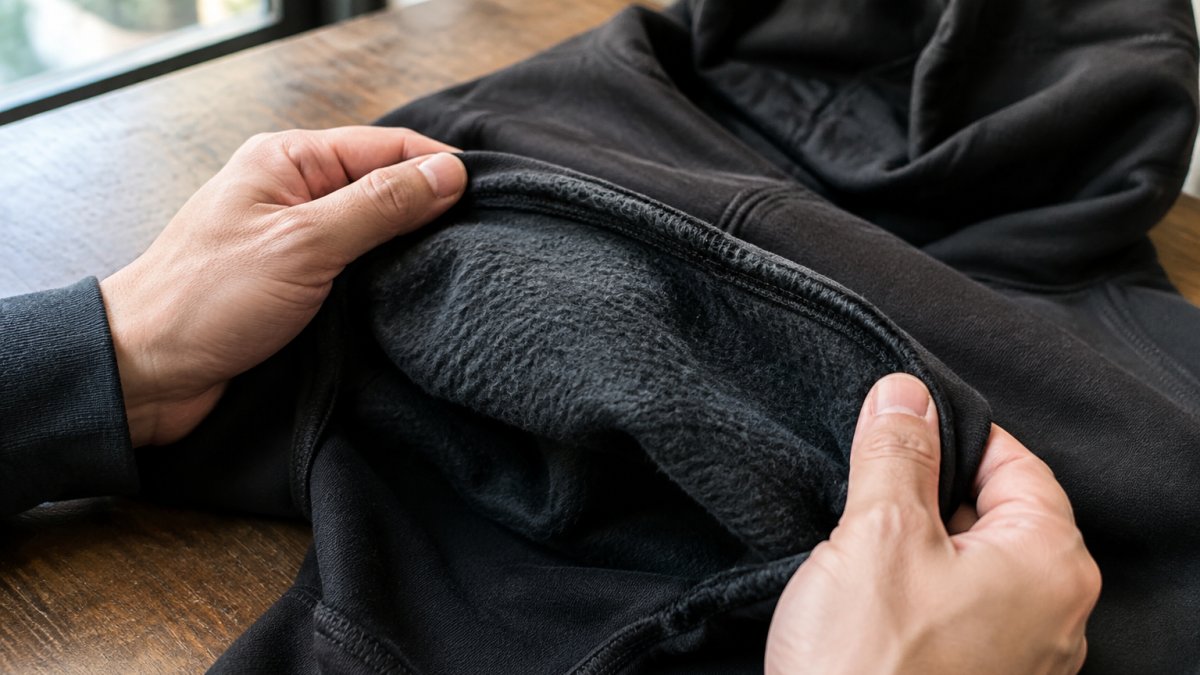
Stitching tells you how the garment will age. Look for twin-needle topstitching along the shoulders and hem, reinforced seams at stress points, and ribbing that snaps back when you stretch it. A common mistake is judging a hoodie by the outside only. Flip it inside out and check the seam allowance.
Fit and structure matter just as much. Side-seamed construction gives a hoodie a cleaner silhouette than a tubular body, and a relaxed or oversized fit should drape rather than sag.
The Real Cost Drivers Behind Hoodie Pricing
Hoodie pricing breaks into a handful of cost buckets, and premium brands spend more in almost every one. To understand why a premium streetwear hoodie costs more, it helps to see a realistic example of how a $120 hoodie gets there.
The honest answer to why premium streetwear hoodies cost more is that the cost is real and distributed across many stages. To see who stands behind the brand, read About Us. Heavier fabric, denser stitching, smaller runs, design work, freight, duties, and marketing all carry a price, and there is no way to fake it without cutting somewhere a buyer will eventually notice.
Small-Batch Production and the Cost of Never Restocking
Small-batch production means setup costs are spread across fewer units.
Design and pattern development are also amortized across fewer pieces. A brand that never restocks takes on real risk, because unsold inventory cannot be recouped in a later season. That risk is priced into the garment.
This is the trade-off behind every limited-run drop. You pay more per hoodie, but you get a design that stays exclusive. When a run sells out, it is genuinely gone, which is why small-run labels tend to attract buyers who want something nobody else is wearing.
Are Heavyweight Hoodies Worth It? Weighing Cost Per Wear
Are heavyweight hoodies worth it? Usually yes, if you measure cost per wear instead of sticker price. A premium hoodie that lasts several years and gets worn weekly almost always beats three cheap hoodies that flatten within a season.
Run the math on your own closet. Divide the price by the number of times you realistically wear it. A hoodie you reach for twice a week for three years gets far more use than a cheap one that loses shape by month four. Factor in replacement frequency and the premium option wins.
Shipping and bundle savings shift the math further. Psycho Jim offers free shipping to Canada and the USA. Before you commit, check the shipping details so the total value is clear.
How to Verify Hoodie Quality Before You Buy
Verifying quality before you buy takes five minutes and saves you a return. Use this checklist, which goes beyond surface impressions and focuses on the details that separate a hoodie that lasts from one that pills and stretches.
- Check the GSM or oz/yd² weight in the product specs. Premium streetwear typically starts around 280 GSM (about 8.3 oz/yd²) and climbs past 330 GSM (about 9.7 oz/yd²). If the listing omits fabric weight, that is a warning sign.
- Read the fabric blend. Look for a high cotton ratio, ideally ring-spun or combed cotton. A blend with more than 50 percent polyester is likely to pill and trap heat. Check whether the cotton is organic or conventional if sustainability claims matter to you.
- Inspect the stitching in close-up photos. Twin-needle topstitching along shoulders, armholes, and hem indicates durability. Single-needle stitching with loose tension is a cost-cutting sign. Look for reinforced bartacks at stress points like pocket corners and the hood opening.
- Examine the ribbing. Stretch the cuff or hem in the photo if possible, or read reviews about recovery. Quality ribbing with elastane or a tight knit snaps back; cheap ribbing stays stretched. Ribbing that is too thin or loosely knit will bag out within weeks.
- Check the hardware. Metal eyelets, sturdy drawcords with metal or heat-shrink tips, and smooth zippers (if applicable) signal attention to detail. Plastic hardware that feels brittle or drawcords that fray easily are marks of a lower-grade build.
- Confirm side-seamed construction. A side-seamed body gives a cleaner silhouette and better structure than a tubular knit, which twists and sags over time. Product photos or descriptions should mention side seams.
- Look for shrinkage and care information. Pre-shrunk or garment-dyed fabrics shrink less. If the listing does not mention shrinkage or care instructions, assume the worst. Reviews that mention shrinking or color fade are a red flag.
- Read reviews that mention washing, pilling, and colorfastness. Real customer feedback after several washes is more valuable than any spec sheet. Look for patterns in complaints, not just star ratings.
- Check the return and shipping policy before ordering. A brand confident in its construction will offer a reasonable return window and clear shipping terms. Vague policies are a risk.
A common mistake is trusting a single hero photo. Ask for interior shots and real customer photos. A brand confident in its construction will show the seams, the ribbing, and the fleece lining up close. If the listing hides those details, that tells you something too.
Watch out: a high price tag alone does not guarantee quality. A generic blank with a logo and a high price is still a generic blank.
Shop the Psycho Jim Signature Collection
The Psycho Jim Signature Collection is our answer to fast fashion: heavyweight fabric, dense stitching, and designs dropped in small runs that never restock. Our Signature Premium Sweatshirt runs $64.95 with an 8.5 oz three-end fleece build, and the vintage crewneck runs $99.95 with a 9.7 oz/yd² organic cotton blend and twin-needle topstitching.
If you want a hoodie that earns its price through cost per wear, start with the collection and check the specs against the checklist above.
The real question is not whether a premium streetwear hoodie costs more, but whether you are tired of replacing cheap ones every season. Psycho Jim builds heavyweight hoodies in limited runs with dense stitching, structured fits, and designs that never restock, plus free shipping to Canada and the USA. Get started with Psycho Jim and build a wardrobe that outlasts fast fashion.
Frequently Asked Questions
Is $100 expensive for a hoodie?
It depends on what you're comparing. A $100 hoodie from a premium streetwear brand typically uses heavier fabric (9-10 oz/yd² or more), reinforced stitching, and smaller production runs than a $30 mall hoodie. Psycho Jim's Premium Vintage Crewneck sits at $99.95 with 9.7 oz/yd² organic cotton blend fabric and twin-needle stitching. If you wear it weekly for several years, the cost per wear often lands below a cheap hoodie you replace every season.
Does a higher GSM mean a better hoodie?
Not automatically. GSM (grams per square meter) measures fabric weight, and heavier fabric usually means more warmth, better drape, and less see-through thinness. But a 400 GSM hoodie with poor stitching or cheap cotton can still fall apart. Look at GSM alongside fabric composition, seam construction, and how the garment holds shape after washing. A well-made 330 g/m² hoodie often outperforms a poorly constructed 400 g/m² one.
What makes a hoodie good quality?
Four things matter most: fabric weight and composition (heavyweight fleece with a high cotton content), construction details like twin-needle stitching and side seams, hardware quality on drawcords and zippers, and fit consistency after washing. Check for reinforced seams at stress points, ribbed cuffs that snap back, and a brushed interior that stays soft. Reviews with real customer photos are the fastest way to confirm a hoodie holds up over time.
Are heavyweight hoodies worth it?
For most people who wear hoodies regularly, yes. Heavyweight fabric is generally heavier and more substantial than lighter alternatives. The upfront cost is higher, but a $65-$100 heavyweight hoodie worn 50 times a year for three years costs less per wear than replacing a $30 hoodie annually. The value depends on fit and how often you actually wear it.
Why are premium streetwear hoodies more expensive than fast fashion?
Premium streetwear hoodies cost more because of heavier fabric, better construction, smaller production runs, and design work that fast fashion skips. A small-batch brand can't spread fixed costs across 100,000 units the way a mass retailer can, so each hoodie carries more of the production, design, and sourcing cost. You're paying for fabric weight, construction and small-batch production, not just a logo.
How can I tell if a hoodie is good quality before buying?
Check the fabric weight in oz/yd² or g/m², look for side-seamed construction, and confirm the cotton content. Read reviews that mention shrinkage and color fading after washing. Ask whether the brand shows close-up photos of seams and fabric. Psycho Jim product listings include fabric weight and composition, so you can compare before you commit.
